|
Jinyuan Zhang I'm currently a second-year Robotics MSE student at the GRASP Lab at the University of Pennsylvania (UPenn), advised by Prof. Vijay Kumar and Yuwei Wu. Previously, I received my BEng in Electronic and Electrical Engineering from University College London (UCL), where I was advised by Prof. Boli Chen. I am focusing on developing collaborative robotic systems. My current work explores learning-based control, multi-agent coordination, and scalable algorithms that support robust cooperation in complex environments. |

| ·
Research Projects |
|
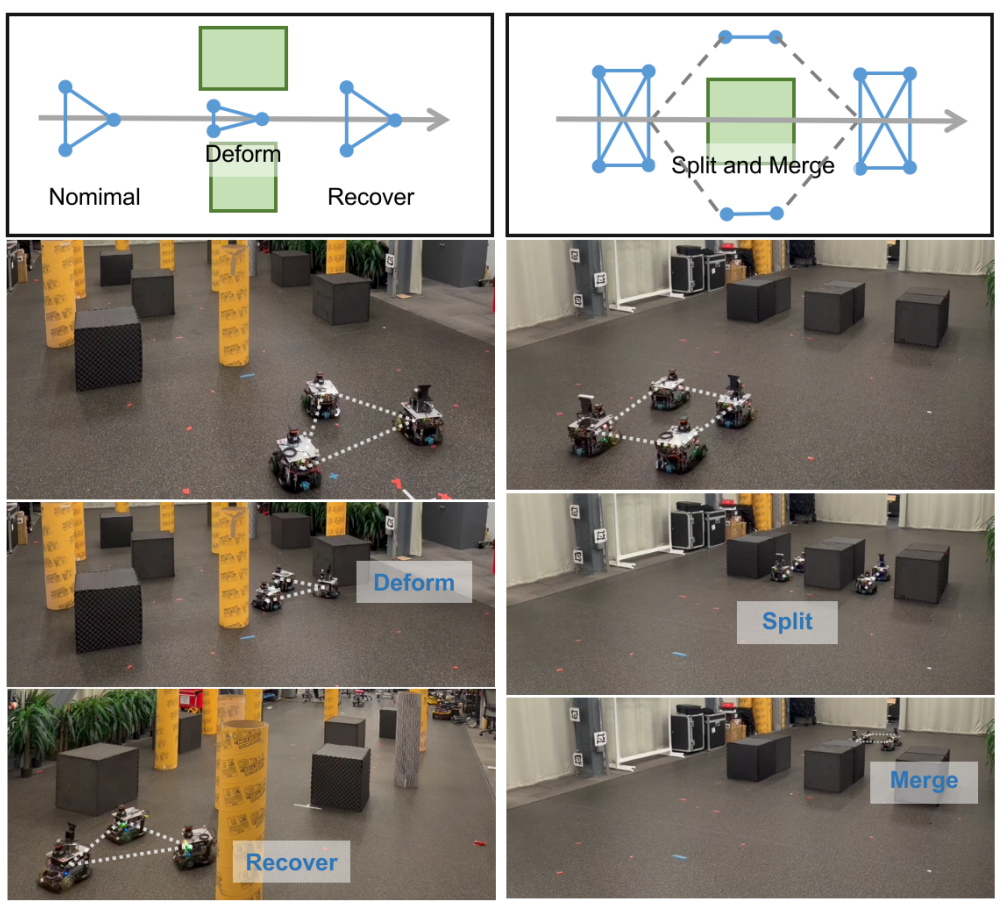
EFLUX: Elastic Multi-Robot Formation Navigation and Adaptation with Agentic LLMs
Topics: MAS, Agentic LLMs, Formation Control, Navigation
pdf
| Under Review
Multi-robot teams need to coordinate their formation so as to fit the constraints of the environment. How to maintain and adapt the formation to navigate narrow, complex environments with minimal deformation while preserving its structural properties? We propose EFLUX, a geometry-grounded LLM agentic framework for automatic and elastic multi-robot formation navigation, where an LLM reasons jointly over deformation actions, such as scaling and shearing, and reconfiguration actions, such as splitting and merging, which are then translated into executable per-robot waypoints through a closed-loop generation, verification, and correction pipeline. |
|
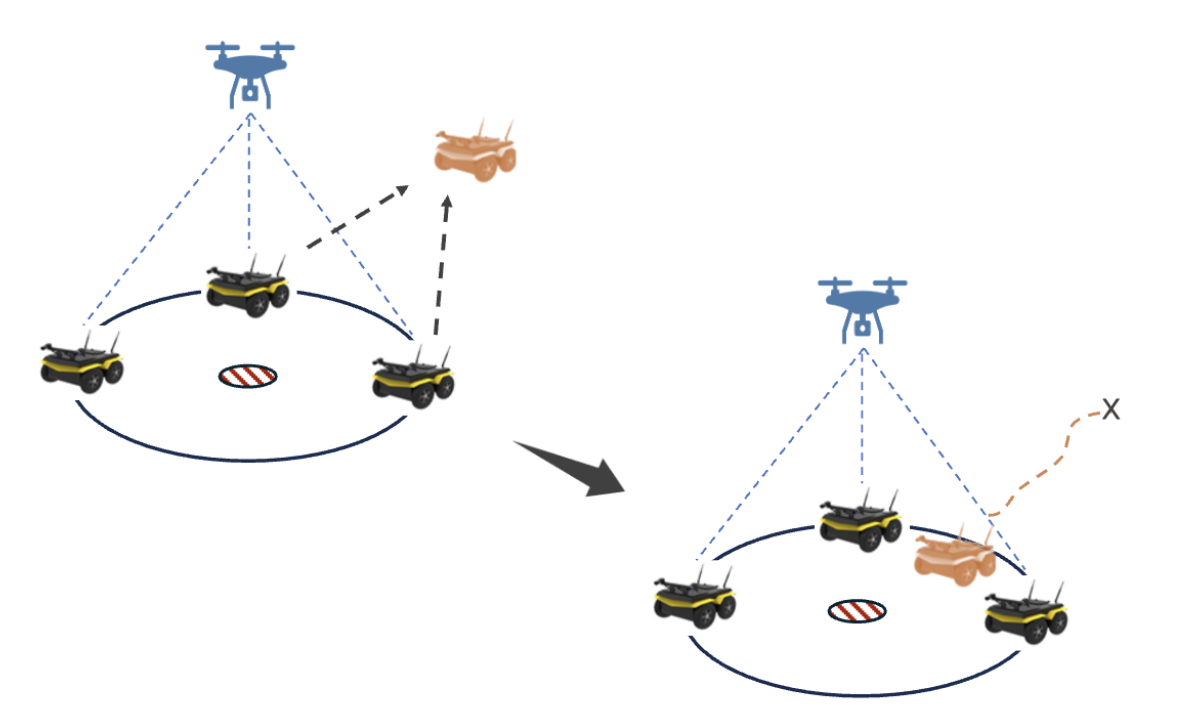
Distributed Cooperative Control for Multi-Agent Formation and Containment Control in Unknown Environments
Topics: MAS, Distributed Control, Formation Control, Obstacle Avoidance
pdf /
code
Designed a distributed, safety-critical control framework for MAS by integrating a leader–follower law with consensus protocols for formation and containment control. Implemented an enhanced Artificial Potential Field (APF) algorithm to ensure robust obstacle avoidance. Validated the framework's efficacy through a simulated robot rescue mission, demonstrating successful target formation and collision-free navigation in cluttered environments. |
|
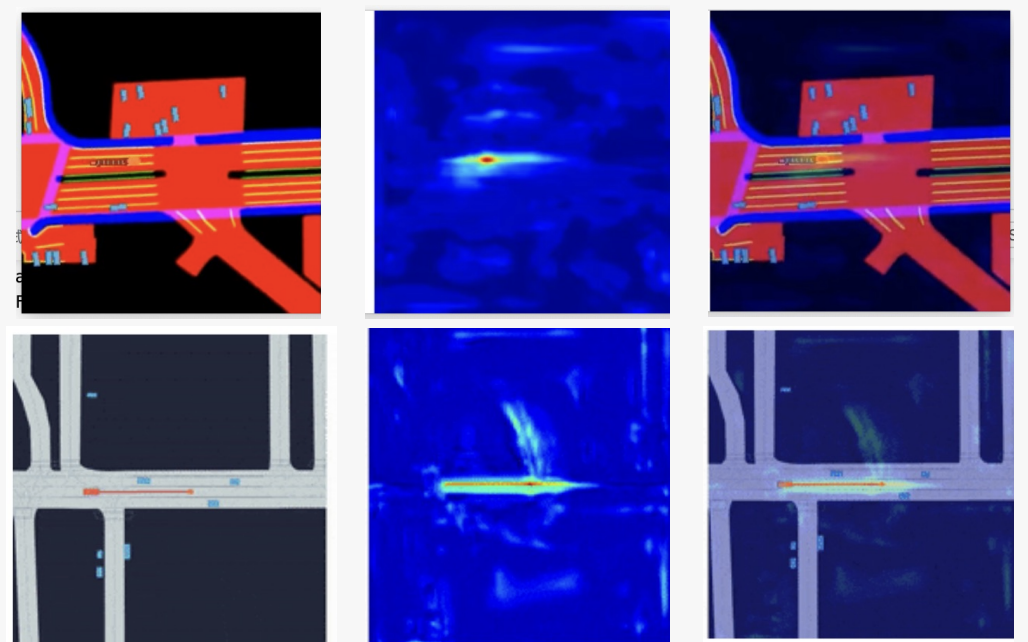
Bi-level Learning for Traffic Simulation
Topics: Imitation Learning, Traffic Simulation, Planning
pdf /
code
Implement a bi-level imitation learning framework that decouples traffic simulation into high-level intent inference and low-level goal-conditioned control. The method utilizes real-world driving logs to implement a realistic multi-agent traffic simulator, containing a planning module that ensures diverse behaviors and long-horizon stability. |
Past Projects |
|
PPO-Based Autonomous Drone Racing through Gate Sequences in Isaac Sim
Topics: RL, Autonomous Drone Racing, Sim-to-Real
pdf /
code
Trained a PPO policy to fly a Crazyflie quadrotor through a seven-gate racing circuit in NVIDIA Isaac Sim, featuring a powerloop segment and chicane. The system combines dense progress shaping, sparse gate-pass bonuses, a compact 36-dimensional body-frame observation, a five-stage reset curriculum, and domain randomization, completing three laps in 18.04 s with 4096 parallel environments. |
|
|
Autonomous Dynamic Block Stacking with a Franka Panda
Topics: Manipulation, Motion Planning
pdf /
code
Developed a complete autonomous manipulation system for a 7-DoF Franka Panda in ROS-Gazebo, integrating AprilTag detection, FK/IK, and real-time control loops. This pipeline enabled the robust stacking of static and dynamic objects through adaptive motion timing and feedback. Won the 1st place of final competition. |
|
|
Quadrotor’s State estimation, Planning and Control
Topics: Aerial Robotics, Motion Planning, Control
pdf /
code
Implemented a full-stack autonomy pipeline that integrates visual-inertial state estimation, motion planning, and geometric control. The system fuses stereo vision and IMU data via a quaternion-based Error-State Kalman Filter (ESKF) for 6-DoF pose estimation, generates collision-free, minimum-snap trajectories using an A* approach with differential flatness, and executes precise tracking through a nonlinear SE(3) geometric controller. |
|
|
End-Effector Design for Robotic Arm
Topics: Medical Robotics
pdf /
code
Designed a soft, multi-modal gripper to prevent multiple picks and avoid package defects, validated on the Amazon Robotic Manipulation Benchmark dataset, and an ultrasonic bone knife-based end effector for a surgical robot to remove tumors. |
|
Sourced from this website. |